4. Noah and the Flood (Genesis 6-9)
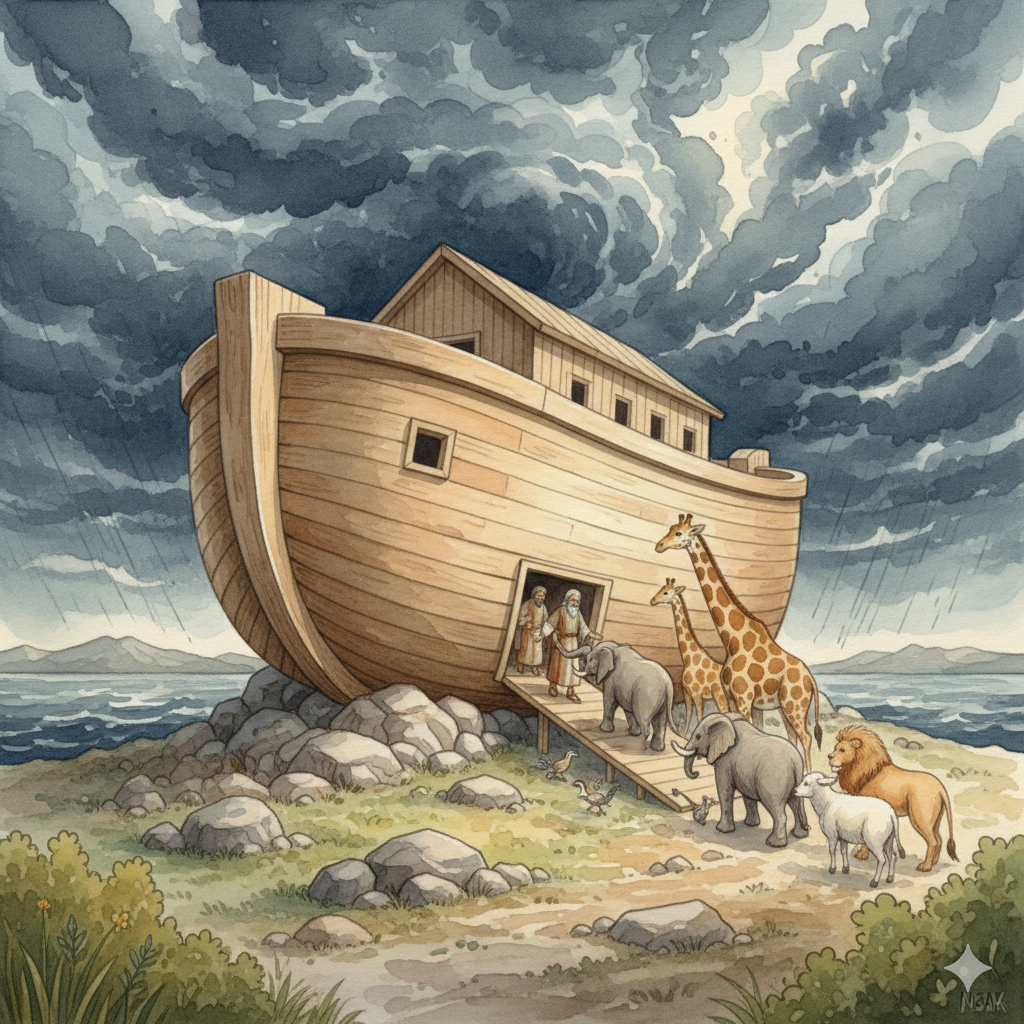
Years passed and humanity grew greatly, but unfortunately, selfishness and violence grew as well. The world became filled with wickedness and people forgot about God, living as if others did not exist. The Bible says that God was "grieved to the heart" seeing what His creation had become. However, in the midst of all that darkness, there was a man named Noah who was different. He was a righteous person who walked with God and tried to do good. Therefore, God decided to give humanity a second chance through him.
God warned Noah that a great flood would cleanse the earth and asked him to build a gigantic wooden ark. Imagine the scene: Noah building a huge boat in the middle of dry land, probably enduring the mockery of his neighbors who did not understand anything. But Noah trusted God and worked with patience. He took his family and pairs of all animals into the ark so that life could start anew. When the rains began, they were not a normal storm; it was as if the floodgates of the heavens were opened. The water covered everything, reminding us that without God, the world returns to chaos.
After a long time floating in the silence of the ocean, Noah released a dove that returned with an olive branch in its beak: there was dry land! When they finally left the ark, the first thing Noah did was give thanks to God. Then something beautiful happened: God placed a rainbow in the sky. That rainbow was not just a natural phenomenon, but a "signature" or a contract of friendship. God promised that He would never again destroy the earth and that He would always care for us. It was a new beginning, a second chance for human beings to learn to live in peace and harmony with the Creator and nature.
Key Points according to the Bible
- God's Grief: It is not that God is an angry judge, but that His "sadness" shows how much He loves His creatures.
- Noah as a Model of Faith: He teaches us that it is worth being faithful to what is right, even when the whole world goes in the opposite direction.
- The Ark and the Church: The ark is an image of the Church; a place where God protects and saves us from the "storms" of life.
- The Flood as Purification: Water not only destroys but cleanses, reminding us of the Sacrament of Baptism.
- The Covenant of the Rainbow: It is God's first great pact with all humanity, showing that His mercy is stronger than our mistakes.
Biblical Text
Consult the full biblical text of Noah here: USCCB - Genesis Chapter 6-9
Reflection Activities: Genesis 6-9
| 1. Text Comprehension: What sign did Noah receive to know there was dry land and what was the meaning of the rainbow? |
| 2. Doctrinal Content: How does Catholic theology explain God's "grief" in relation to His love for His creatures? |
| 3. Sacramental Symbolism: Explain the doctrinal relationship between the waters of the Flood and the Sacrament of Baptism. |